Seamless Patterns with Vegetables and Plants: A Creative Guide to Repeating Backgrounds
In the world of design, patterns are more than just decorative elements—they tell stories, evoke emotions, and reflect themes that resonate with audiences. One of the most versatile and appealing pattern categories is farm harvest motifs, which bring the beauty of nature into digital and print projects alike. Seamless patterns featuring vegetables like pumpkins, beans, tomatoes, radishes, paprika, eggplants, onions, potatoes, cabbages, carrots, bars, leaves, fruits, and plants are gaining popularity for their ability to add warmth, authenticity, and a touch of rustic charm to various creative works.
What Are Seamless Patterns?
A seamless pattern is a repeating design that can be tiled without visible edges or breaks. These patterns are often used in backgrounds, fabric designs, packaging, and web graphics because they offer a cohesive visual experience across large areas. When it comes to vegetable and plant-based seamless patterns, the goal is to create a natural, flowing layout that mimics the organic forms found in gardens and farms.
Such patterns are particularly useful when designing anything related to food, agriculture, sustainability, or seasonal themes. They can be applied to everything from branding materials to greeting cards, and even as part of larger illustrations or website headers.
The Role of Repeating Backgrounds in Modern Design
Repeating backgrounds play a crucial role in modern graphic design. Whether you're working on an app interface, a social media post, or a printed poster, these backgrounds help set the tone and atmosphere of your project. Vegetable and plant-based repeating backgrounds are especially effective when aiming to communicate freshness, health, or a connection to the earth.
- Web Design: Use these patterns for subtle background textures in websites related to food delivery services, organic markets, or farming blogs.
- Print Media: Apply them to brochures, banners, or product labels to highlight natural ingredients or locally sourced produce.
- Creative Projects: Incorporate them into scrapbooking, art prints, or educational materials about botany and agriculture.
Why Choose Vegetable and Plant Motifs?
Vegetable and plant motifs are not only visually pleasing but also carry deep cultural and symbolic meanings. For example, pumpkins represent autumn and harvest time, while cabbage and onions might symbolize sustenance and daily life. By using these motifs in your designs, you tap into universal themes that connect people to nature and tradition.
Moreover, these types of patterns are incredibly adaptable. You can choose to highlight bold shapes like oversized pumpkins or go for a more subtle look with tiny bean sprouts and leaf accents. The versatility makes them ideal for both minimalist and maximalist styles.
Common Uses of Vegetable and Plant-Based Seamless Patterns
- Food Industry Branding: Restaurants, cafes, and grocery stores use these patterns to create a fresh and inviting aesthetic.
- Seasonal Marketing: Autumn campaigns often feature pumpkin, carrot, and apple motifs to align with the season's harvest theme.
- Home Decor: From wallpaper to throw pillows, vegetable and plant patterns add a cozy, bohemian feel to living spaces.
- Stationery and Packaging: Eco-friendly brands love using these motifs to emphasize sustainability and natural ingredients.
- Digital Art and Illustration: Artists use them as base layers or overlays to enrich their compositions with texture and depth.
Understanding File Formats: SVG, JPEG, EPS, AI
When downloading seamless patterns, especially those focused on farm harvest motifs, it’s essential to understand the file formats available. Each format serves a different purpose depending on your needs.
SVG (Scalable Vector Graphics)
SVG files are vector-based, meaning they maintain quality at any size. This makes them perfect for digital applications such as logos, illustrations, and web graphics. If you're planning to scale your design for different screen sizes or resolutions, SVG is your best bet.
JPEG (Joint Photographic Experts Group)
JPEG is a raster image format that compresses images for smaller file sizes. It’s great for online use where quick loading times are important. However, JPEGs lose quality when scaled up, so they’re less suitable for high-resolution printing.
EPS (Encapsulated PostScript)
EPS is another vector format that supports complex graphics and is widely used in professional printing. It allows for precise editing and scaling, making it a top choice for designers who need flexibility and high-quality output.
AI (Adobe Illustrator)
AI files are native to Adobe Illustrator and allow full access to vector layers, colors, and effects. They are ideal for users who want to customize the design further, edit individual elements, or rework the composition entirely.
All these formats—SVG, JPEG, EPS, and AI—are included in the instant download package mentioned earlier, ensuring compatibility with a wide range of software and platforms. Whether you're using Canva, Photoshop, or Inkscape, you’ll find the right file to suit your workflow.
How to Use These Patterns Effectively
Now that you understand what seamless patterns are and how the file formats work, let’s explore some practical tips for using vegetable and plant-based patterns in your projects.
1. Pair with Complementary Colors
Vegetable and plant motifs often include earthy tones like greens, browns, oranges, and reds. To make your design stand out, consider pairing the pattern with complementary colors. For example, a pumpkin-themed pattern could pop against a soft cream or slate blue background.
2. Adjust Opacity for Balance
Patterns can easily overwhelm a design if not used carefully. Lowering the opacity of the pattern layer can help keep the focus on other elements while still adding visual interest. This technique is especially useful in UI/UX design or layered illustrations.
3. Combine with Typography
If your project includes text, experiment with placing it over the pattern. Choose fonts that match the style—think hand-drawn scripts for a rustic look or clean sans-serif for a modern twist. Make sure the contrast between the text and the pattern is sufficient for readability.
4. Use in Seasonal Campaigns
These patterns are perfect for seasonal marketing efforts. During fall, for instance, you could feature pumpkin, tomato, and cabbage motifs in promotional materials for farmers’ markets, seasonal recipes, or holiday events. Similarly, springtime might call for fresh green leaves and vibrant flowers.
Benefits of Instant Downloads
One of the biggest advantages of purchasing a vegetable and plant-based seamless pattern pack is the convenience of an instant download. Unlike traditional methods of sourcing or creating patterns, which can take hours or even days, an instant download gives you immediate access to high-quality assets that you can start using right away.
Additionally, since the files are already formatted and ready for use, there’s no need for extra processing or conversion. This saves time and ensures consistency across your projects.
What You Get in the Download
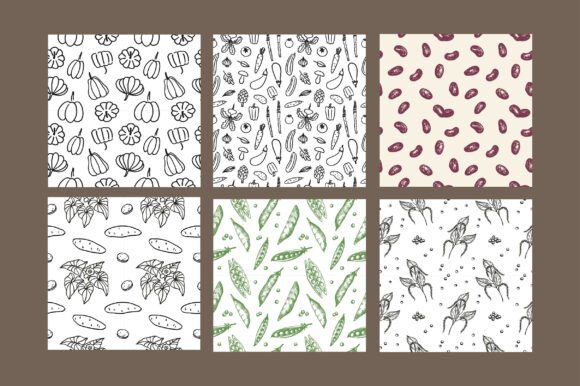
- 6 Repeating Backgrounds: Each one offers a unique arrangement of vegetables, fruits, and plant elements.
- Digital Files: All files are in RGB format, optimized for digital screens and web use.
- High-Resolution JPGs: At 300 dpi, these are suitable for print projects like posters, flyers, and packaging.
- SVG & EPS Files: Ideal for scalable designs and professional printing.
- ZIP File: All the files are neatly organized in a single ZIP archive for easy access and management.
Who Can Benefit from These Patterns?
While these patterns may seem niche, they actually have broad appeal and application. Here are a few groups that can benefit significantly from using vegetable and plant-based seamless backgrounds:
Graphic Designers
Designers working on food-related projects will find these patterns invaluable. They provide a quick and stylish way to enhance visuals without starting from scratch.
Small Business Owners
Entrepreneurs in the food industry, such as bakers, farmers' market vendors, or juice bar owners, can use these patterns to create branded content that feels authentic and relatable.
Artists and Illustrators
For artists looking to incorporate natural elements into their work, these patterns serve as a foundation for more intricate compositions. They can be used as overlays, underlays, or even as inspiration for original artwork.
DIY Enthusiasts
Crafters and hobbyists can apply these patterns to handmade items like T-shirts, tote bags, or home décor. With editable AI and EPS files, customization is simple and fun.
Teachers and Educators
These patterns are excellent for classroom projects or educational materials about botany, nutrition, or seasonal changes. They can be printed as flashcards, posters, or used in interactive digital lessons.
Where to Apply These Patterns
With six different repeating backgrounds included in the instant download, the possibilities are endless. Here are some specific examples of where these patterns can shine:
- Website Headers: Create a welcoming entrance to your site by using a warm, harvest-themed background.
- Social Media Posts: Use these patterns as templates for Instagram posts, Facebook banners, or Twitter headers promoting seasonal products.
- Invitations and Cards: Design thank-you cards, birthday invitations, or event posters with a personal, earthy touch.
- Product Packaging: Stand out on store shelves with eco-conscious packaging that features vegetable and fruit motifs.
- Fabric Prints: Use them for custom apparel, reusable shopping bags, or textiles for home goods.
Debunking Common Misconceptions
There are several misconceptions about seamless patterns, especially those with vegetable and plant motifs. Let’s address a few:
Myth 1: They’re Only for Nature-Themed Projects
Reality: While these patterns are rooted in natural imagery, they can be adapted to many contexts. Think about using a pumpkin pattern for a Halloween promotion or a cabbage motif for a wellness campaign. The key is to match the pattern with the message you want to convey.
Myth 2: Seamless Patterns Are Hard to Work With
Reality: Thanks to the availability of multiple file formats, including SVG and AI, these patterns are designed to be user-friendly. Most modern design tools allow for easy manipulation, so even beginners can integrate them into their work without difficulty.
Myth 3: They Don’t Belong in Professional Settings
Reality: On the contrary, vegetable and plant-based patterns can add a refreshing and approachable element to professional designs. Many companies in the food and wellness industries use them successfully to build brand identity and customer trust.
Creating Your Own Harvest-Themed Designs
If you’re feeling inspired and want to create your own seamless patterns with vegetables and plants, here are some steps to get started:
- Sketch Out Ideas: Begin by drawing your favorite vegetables and plant elements on paper or digitally.
- Digitize the Elements: Convert your sketches into vector graphics using tools like Adobe Illustrator or free alternatives like Inkscape.
- Arrange for Repetition: Test how the elements repeat and adjust spacing, rotation, and color to ensure a smooth transition.
- Export in Multiple Formats: Save your final design in SVG, JPEG, EPS, and AI to maximize usability across platforms.
- Download as ZIP: Organize all your files into a single ZIP folder for easy sharing and storage.
Conclusion
Seamless patterns with vegetables and plants offer a unique blend of aesthetics and symbolism that can elevate any creative project. Whether you're designing for a business, crafting a DIY item, or simply expressing your love for nature through art, these repeating backgrounds provide a flexible and inspiring resource.
By understanding the different file formats and learning how to apply them effectively, you can unlock new levels of creativity and professionalism. And with the convenience of an instant download, you don’t have to wait long before bringing your ideas to life.
So next time you're brainstorming a new design, consider the power of a well-placed vegetable or plant pattern. It might just be the perfect ingredient to make your project stand out—and feel more connected to the earthy, wholesome spirit of the harvest season.